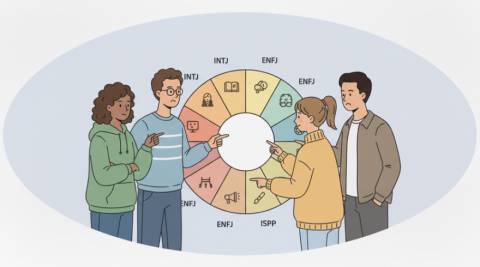
Take Myers-Briggs Personality Test Online
What It Is and Why It Matters
Personality frameworks spark curiosity because they promise a clearer map of how we think, decide, and collaborate. Across workplaces and classrooms, the Myers-Briggs type indicator often acts as a shared language for discussing differences without judgment. Rather than ranking people, this instrument highlights patterns that influence attention, energy, and comfort zones. When used judiciously, it becomes a conversation starter that invites nuance and deeper self-reflection.
Originally inspired by Jungian ideas, the tool groups preferences into recognizable constellations that describe how individuals orient to the world. Within many communities, the Myers-Briggs type indicator MBTI designation functions as shorthand for underlying tendencies rather than rigid labels. That distinction matters, because preference does not equate to proficiency or fate in any domain. Development comes from introspection, feedback, and deliberate practice supported by thoughtful coaching.
- It offers a nonjudgmental vocabulary for discussing work styles and communication needs.
- It encourages respectful curiosity about differences rather than stereotypes.
- It provides a starting point for planning growth in leadership and teamwork.
How the Test Works: Preferences, Patterns, and Nuance
Most readers encounter four paired preferences that shape everyday choices, from how we recharge to how we evaluate information. When exploring options, the Myers-Briggs type indicator MBTI test is best approached as a snapshot of preference, not an IQ measure, and it benefits from thoughtful interpretation. The framework maps where energy flows, how information is gathered, how decisions tend to be made, and how people prefer to organize their outer world with structure or flexibility.
| Dichotomy | Focus | Brief Description |
| Extraversion / Introversion | Energy source | Preference for outer engagement or inner reflection when recharging. |
| Sensing / Intuition | Information | Focus on concrete details or patterns and possibilities when learning. |
| Thinking / Feeling | Decisions | Emphasis on impersonal logic or values and impact on people when judging. |
| Judging / Perceiving | Lifestyle | Preference for planned structure or adaptive spontaneity in daily life. |
For newcomers, the Myers-Briggs type indicator test questions tend to contrast paired descriptors to surface habitual choices that feel natural. Interpreting a result works best when it includes verification, reflection on real situations, and openness to exceptions. Skilled facilitators emphasize that type explains preference, not competence, and that people flex beyond defaults when circumstances demand it.
- Type clarifies preference patterns without limiting potential or growth.
- Accuracy improves when respondents answer based on long-term tendencies.
- Verification helps align reported results with lived experience.
Benefits and Practical Applications for Work and Life
Teams use type insights to streamline meetings, reduce friction, and assign roles that fit strengths while encouraging stretch goals. Some practitioners appreciate that the Myers-Briggs type indicator test free resources can jump-start group discussions about collaboration norms across functions. Leaders leverage the framework to fine-tune feedback styles, design training, and shape change-management strategies that honor diverse motivations and processing speeds.
Career advisors, educators, and coaches often integrate preference insights into individualized development plans. When budgets are tight, the Myers-Briggs type indicator MBTI test free options still provide an entry point for reflective dialogue before committing to a full program. Families and partners also find value by naming differences in decision pacing, social energy, and planning habits so that conflicts become solvable logistics instead of personal attacks.
- Onboarding accelerates when managers tailor communication to preference patterns.
- Conflict de-escalates as teammates recognize intent behind contrasting styles.
- Career exploration gains traction by aligning work contexts with energy patterns.
- Change initiatives succeed more often when messaging resonates across types.
Taking a Test and Making Sense of Your Results
Preparation should emphasize honest, instinctive responses over idealized self-images or job expectations. In early exploration phases, the Myers-Briggs type indicator MBTI free test paths can be useful as low-stakes starting points for reflection. After receiving a type indication, it helps to review descriptions critically, annotate what resonates or misses, and discuss examples from recent decisions.
Interpretation deepens when you compare preferences across contexts such as home, study, and work to spot situational flexibility. For long-term development plans, the Myers-Briggs type indicator free materials should be balanced with validated assessments and coaching conversations that connect insights to measurable goals. Action steps might include experimenting with alternate approaches, scheduling recovery time aligned with energy needs, and reworking team agreements to reflect diverse workflows.
- Answer quickly and honestly to capture natural preferences over aspirational traits.
- Use verification discussions to refine your best-fit type and reduce bias.
- Translate insights into concrete behaviors, not abstract labels.
Misconceptions to Avoid and Best Practices to Embrace
Labels can tempt people to oversimplify the rich complexity of human behavior, so nuance is essential. Despite marketing hype, the free Myers-Briggs type indicator rhetoric sometimes confuses novelty with scientific consensus, which creates unrealistic expectations. Treat the framework as a practical lens for communication and collaboration rather than a deterministic crystal ball about performance or potential.
Ethical use foregrounds consent, context, and constructive application while avoiding gatekeeping or stereotyping. Among remote teams, the Myers-Briggs type indicator free online buzz can overshadow the deeper work of building trust and psychological safety across cultures. Responsible practitioners pair type insights with clear norms, inclusive facilitation, and continuous feedback loops that respect individual variance.
- Avoid making hiring or promotion decisions based solely on type results.
- Revisit preferences periodically because context can shift expression.
- Combine type data with skills assessments, goals, and observed behaviors.
- Champion diversity within and across types to strengthen team resilience.
FAQ: Expert Answers to Common Questions
Is this a measure of ability or intelligence?
It is a model of preferences, not a test of skill, talent, or cognitive horsepower. When time is short, the free Myers-Briggs type indicator test online route gives a quick orientation to the four preference pairs for basic understanding. Use results as a conversation prompt and integrate other evidence when making important decisions.
How accurate are my results over time?
Stability improves when responses reflect long-term tendencies rather than current pressures or roles. For frequent users, the Myers-Briggs type indicator test free online tools can show similar patterns across retakes when context remains steady. Verification sessions help reconcile discrepancies between reported type and lived experience over months or years.
Can I be “in the middle” on a preference?
Many people report moderate preferences and flex their approach based on context, deadlines, or audience. The framework expects situational agility while recognizing that most have a comfortable default. Rather than forcing extremes, focus on when and how to pivot deliberately.
Should teams share their types publicly?
Sharing can improve empathy and streamline collaboration when norms emphasize respect and voluntary participation. Teams should avoid weaponizing labels and instead use them to plan meetings, handoffs, and feedback cadences. Privacy, consent, and ongoing consent matter just as much as any diagram or chart.
What if my role demands behaviors outside my preference?
High performers routinely stretch beyond their defaults, especially during crunch times or high-stakes projects. Sustainable growth comes from designing recovery rituals, skill training, and environmental tweaks that reduce strain. Over time, skillful flexing becomes easier and less draining with practice and support.