Take Myers-Briggs Personality Test Online
What Is the Myers-Briggs Test and Why It Endures
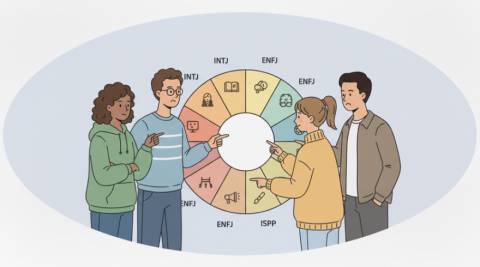
Personality frameworks intrigue people because they offer maps for navigating differences in motivation, communication, and decision-making. Among the most recognizable is the system that translates Carl Jung’s ideas into an accessible typology using four pairs of preferences and 16 possible type patterns. Practitioners value it for shared language, while critics remind us to treat results as hypotheses, not verdicts. Both perspectives help readers engage thoughtfully with any assessment.
Developed by Katharine Cook Briggs and Isabel Briggs Myers, the model emphasizes preference rather than ability, spotlighting energy orientation, information gathering, decision logic, and lifestyle rhythm. Originally inspired by Jung’s typology, the framework we now call Myers-Briggs type indicator MBTI organizes preferences into four paired dimensions, each acting like a dial rather than an absolute. That nuance matters, because healthy type development includes stretching beyond comfort zones when circumstances demand it.
Global interest has expanded the reach of professional certification, team workshops, and coaching applications across career development and personal growth. For multilingual audiences, providers frequently localize content and ensure measurement equivalence across regions. For international audiences, many providers label assessments as MBTI test english to distinguish language-specific versions, which makes cross-border programs easier to coordinate and evaluate.
The Four Dichotomies and How Type Dynamics Shape Behavior
At the core are four preference pairs: Extraversion–Introversion, Sensing–Intuition, Thinking–Feeling, and Judging–Perceiving. Each pair reflects a natural leaning, not a rigid rule, and together they form a four-letter type code. When people learn about their dominant and auxiliary functions, their most reliable mental processes, they recognize patterns in focus, priorities, and blind spots. That awareness allows leaders, collaborators, and students to adjust tactics and avoid predictable friction.
| Dichotomy | Primary Question | Everyday Signals | Development Tip |
| Extraversion vs. Introversion | Where do you direct and renew energy? | Talk-to-think vs. think-to-talk | Balance solitude and engagement |
| Sensing vs. Intuition | How do you notice and trust information? | Facts and past data vs. patterns and possibilities | Blend evidence with foresight |
| Thinking vs. Feeling | How do you evaluate and decide? | Objective criteria vs. human impact | Integrate logic with empathy |
| Judging vs. Perceiving | How do you orient to structure and pace? | Plan-and-finish vs. adapt-and-explore | Align deadlines with flexibility |
Understanding function stacks moves beyond letters into the rhythm of how people typically lead with either a judging or perceiving function depending on their orientation. If you’re new, a guided inventory such as the Myers-Briggs type indicator MBTI test summarizes your likely pattern across these four continua, which helps you map habits to concrete behaviors. Over time, practice turns insight into repeatable, situationally aware choices.
Type dynamics also explain why two people with one different letter can communicate in strikingly different ways. Across the web, you may see comparisons with the MBTI test 16 personalities test which uses similar letter codes but different scoring models, so it’s wise to read the fine print and treat each report on its own methodological terms.
Benefits and Practical Applications for Work, Study, and Life
When applied with care, this framework reduces conflict and improves collaboration by normalizing difference. Teams learn to treat style clashes as process issues rather than personal failings, and managers gain a vocabulary for matching tasks to strengths. Individuals, meanwhile, use insights to choose learning strategies, shape career experiments, and protect focus from energy drains. The net effect is better alignment between intention and everyday behavior.
New learners often start by sampling approachable materials and visual summaries before diving into deeper certification curricula. For newcomers exploring at no cost, community sites often host a MBTI 16 personalities test free style questionnaire that approximates preference patterns, which can spark valuable self-reflection. When resources are tight, libraries and career centers sometimes curate a MBTI 16 personalities free primer to help students reflect on strengths, study tactics, and interview storytelling.
- Team enablement: calibrate roles, rituals, and meeting formats for balanced participation.
- Leadership development: build situational versatility while honoring core preferences.
- Career exploration: align environments with motivation, feedback style, and focus needs.
- Relationship communication: translate intent across differing information and decision cues.
- Personal productivity: tune schedules, boundaries, and recharge habits to sustain momentum.
How to Take an Assessment Responsibly and Interpret Results
Sound use starts with mindset: treat results as a working hypothesis, not a label. Preferences describe comfort, not competence, and real growth blends self-acceptance with skill stretch. If your outcome feels off, revisit items slowly, reflect on typical behavior (not aspirational or situational), and seek feedback from people who know you well. Coaching conversations matter because they surface context that checkboxes can miss.
Free screeners vary in quality, depth, and scoring transparency, so it pays to read methodology notes and data policies. Before committing to coaching, many people try a MBTI test free online option to get a directional feel, which is useful for reflection and journaling. Still, interpretive guides and trained facilitators add nuance that turns raw letters into practical plans.
Publishers and licensees maintain standards for test construction, administration, and feedback to protect validity. While promotions exist, an official publisher rarely offers a Myers-Briggs type indicator MBTI test free pathway, so verify whether a site is licensed or a look-alike. That small diligence step prevents confusion, preserves data privacy, and ensures your results map to well-documented research.
Comparing Popular Tools, Reports, and Learning Platforms
Multiple products use similar language while applying different psychometric approaches, item types, and reporting styles. Some emphasize narrative insights and coaching prompts, while others emphasize trait scales, percentile charts, and career matches. One widely shared site advertises a MBTI test 16 personalities test free experience, which blends trait scales with type letters for a quick read, though its methodology and feedback features differ from publisher-certified instruments. Knowing these distinctions guards against apples-to-oranges comparisons.
Features, privacy policies, and user experience vary, which affects trust and adoption across teams or classrooms. If you enjoy lighter experiences, a MBTI 16 personalities quiz can still spark discussion, provided you treat the results as hypotheses and seek corroboration in real tasks. For structured development, organizations often add workshops, peer coaching circles, and follow-up experiments to turn insights into measurable behavior change.
- Check methodology notes for reliability, validity, and norm samples.
- Confirm whether the platform supports team maps, action planning, and facilitation.
- Review privacy, data retention, and export options before inviting participants.
- Match report depth to goals: career exploration, leadership growth, or conflict reduction.
- Budget for ongoing practice, not just a one-time result snapshot.
FAQ: Straight Answers to Common Questions
What does this personality framework actually measure?
It indicates preference patterns in how you direct energy, take in information, make decisions, and organize life. These are comfort tendencies, not ceilings, so you can absolutely build skills on the opposite side when the situation calls for it. Over time, self-awareness helps you choose strategies that fit the moment without abandoning your values.
Is it scientific and reliable enough for serious decisions?
Reputable instruments document reliability and validity evidence and recommend intended uses such as development and coaching. As with any psychological tool, proper administration, context, and follow-through matter. Treat results as structured input for conversation rather than a sole determinant of hiring or promotion.
Can I take a no-cost assessment to get started?
Plenty of introductory questionnaires exist and can be helpful for reflection when used thoughtfully. Many readers experiment with a MBTI test free option first to learn vocabulary and notice patterns, and then they deepen understanding with coaching or official resources. The key is to verify transparency about scoring and data handling before you click submit.
How should I use my type results at work or in school?
Translate letters into behaviors, such as meeting formats, decision protocols, and study methods. Share preferences with teammates to co-create norms for feedback, focus time, and brainstorming, and revisit agreements after major milestones. Keep experimenting until your rituals reliably support outcomes and well-being.
Is there an official no-cost path from the primary publisher?
Publishers set policies to sustain quality research and practitioner training, so most official pathways are paid or institution-sponsored. You will occasionally encounter promotions referencing a Myers-Briggs type indicator MBTI free test offer, and that’s where caution helps you distinguish licensed providers from imitators. When in doubt, cross-check sources, or consult a certified practitioner for clarity.